Why heavy hitting plyoballs are changing contact quality training
In baseball, there is a lot of talk about exit velocity, launch angle and bat speed. But before all these things become relevant, there is one skill that ties it all together: Contact Quality.
Because even the fastest swing is of little use if the barrel does not get behind the ball cleanly. This is exactly where the C2 baseball hitting plyoballs come in. They were developed to give hitters immediate and honest feedback and at the same time enable training that is efficient, intensive and can be carried out almost anywhere.
C2 Hitting Plyoballs: Better contact – more power
What is contact quality anyway?
Contact quality describes how efficiently energy is transferred from the club to the ball. Good contact quality is achieved when the barrel is stable and works directly behind the ball and the ball is hit centrally.
Poor contact often manifests itself in
- weak groundballs
- Mishits
- High spin rates
- Lack of control
- inconsistent ball flights
Many players try to solve these problems by increasing their power or bat speed. In reality, however, the problem often lies in the moment of impact itself.
If you produce consistently good contact, you hit harder balls – even without maximum effort.
Why plyoballs provide such effective feedback
Normal baseballs are relatively forgiving. Even slightly poorly hit balls can still look solid. This is exactly what makes it difficult to really recognize small errors in the barrel path or timing.
Plyoballs work differently.
If the barrel is not cleanly behind the ball, the ball starts to spin extremely on contact or fly off the club “like a pizza”. This direct feedback makes errors immediately visible.
The player senses:
- whether the barrel was stable
- whether the ball really accelerated
- whether the contact was centered
- whether the club angle was correct
This makes training much more honest and efficient.
Why we opted for heavy plyoballs
After many tests, we have found that heavy plyoballs work best for contact quality training.
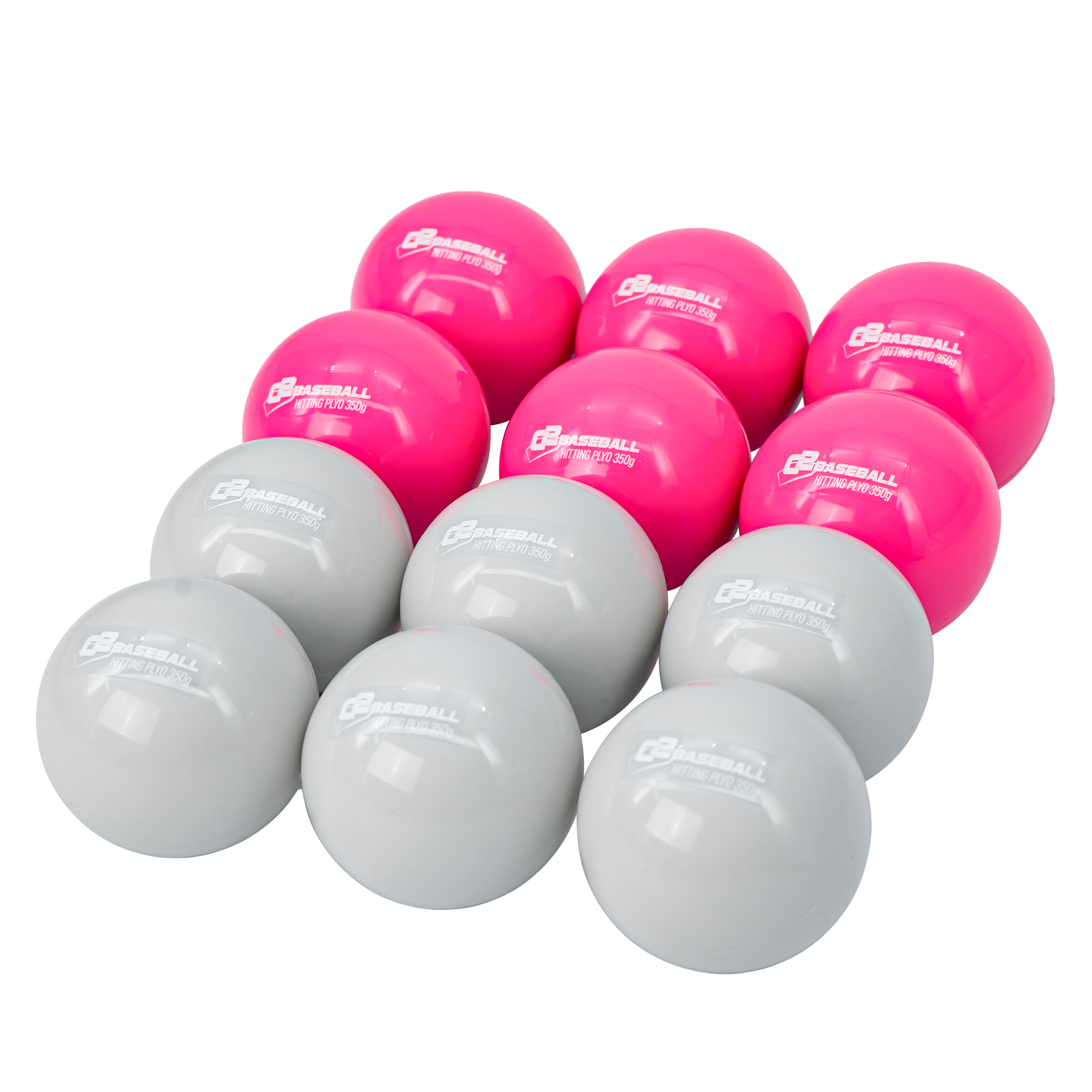
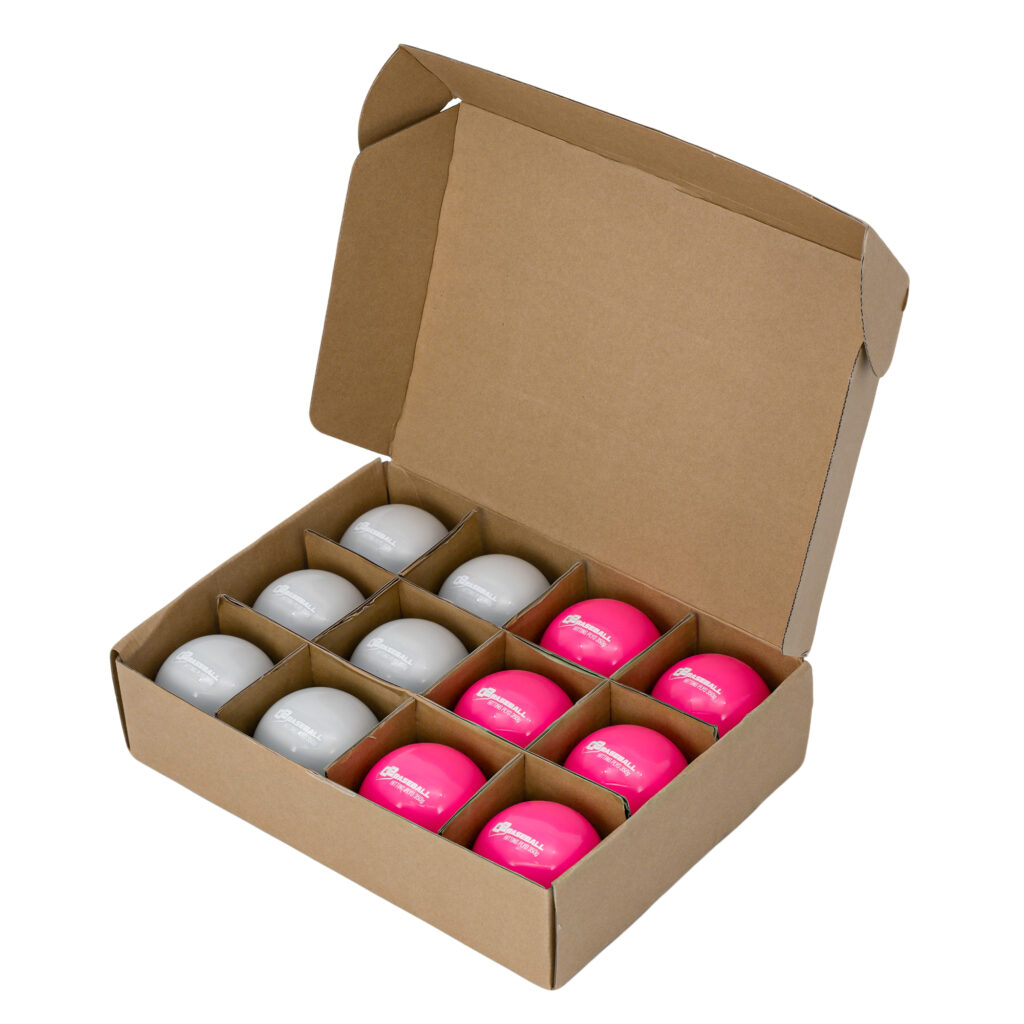
That is why all C2-Baseball Hitting Plyoballs weigh 350 grams.
The higher weight changes the training in several ways at the same time.
1. the player must really exert pressure on the ball
Light training balls can often simply be “flicked away”. The player still gets flight and has the feeling of having made good contact.
This does not work with heavy plyoballs.
The hitter must:
- work stably through the ball
- Check the barrel
- Maintaining tension in the body
- Actively accelerate
This results in significantly higher quality movement feedback.
2. the ball flies less far
A major advantage of heavy plyoballs is the shorter flight distance.
This makes them perfect for:
- Small training areas
- Indoor training
- Garages
- Cages
- Small fields
- Backyard Workouts
Players can practice high-quality swings without the need for huge distances or complete baseball fields.
3. better connection between body and barrel
The additional weight makes inefficient movements immediately visible.
Players quickly realize:
- if they only “flip” the ball
- if the barrel operates too early or too late
- if the sequence is not correct
- if the body does not stay cleanly behind the swing
This not only improves contact, but often also makes the entire swing mechanics more efficient.
Why colors are important in training
An often underestimated factor in training is visibility.
Many training balls quickly disappear into the grass or take unnecessary time to collect. That’s why we have deliberately chosen colors that are easy to find on the field.
It sounds simple, but it makes a huge difference in everyday life:
- fewer lost balls
- fewer interruptions
- More efficient training sessions
This saves a surprising amount of time and energy, especially during intensive hitting sessions.
Why two colors?
The two colors are not just a design element.
They enable additional swing decision training.
A coach or training partner can use different colors to train decisions:
- only beat certain colors
- Do without certain colors
- Train quick visual reactions
- Improve timing and pitch recognition
This makes the plyoballs not only a tool for better contact, but also for better decisions at the plate.
Because good hitters are not only characterized by their swing – but also by their ability to attack the right pitches.
Training with real game transfer
The goal of training should never simply be to “work hard”.
The aim should be to develop skills that transfer directly into the game.
The C2-Baseball Hitting Plyoballs were developed precisely for this purpose.
They help players:
- to produce more efficient contact
- better control of the barrel
- work aggressively through the ball
- make better decisions
- collect higher quality repetitions
And all this in a small space and with immediate feedback.
Which players are suitable for hitting plyoballs?
Actually for almost every hitter.
They are particularly helpful for players who:
- often have mishits
- want to develop more barrel control
- want to improve their contact
- beat to “slappy
- have difficulty accelerating through the ball
- Want to train efficiently indoors
From youth players to advanced athletes, players of almost every age group benefit from honest contact feedback.
Conclusion
Contact quality is one of the most important skills in hitting.
If you consistently put the barrel cleanly behind the ball, you produce harder contact, better ball flights and more offensive consistency.
The C2-Baseball Hitting Plyoballs were developed precisely for this purpose.
With a weight of 350 grams, direct feedback, short flight distance and additional options for swing-decision training, they offer a versatile tool for modern hitting training.
They penalize sloppy contact, reward efficient barrel work and help players develop higher quality swings – whether on the field, in the cage or in a small space at home.


